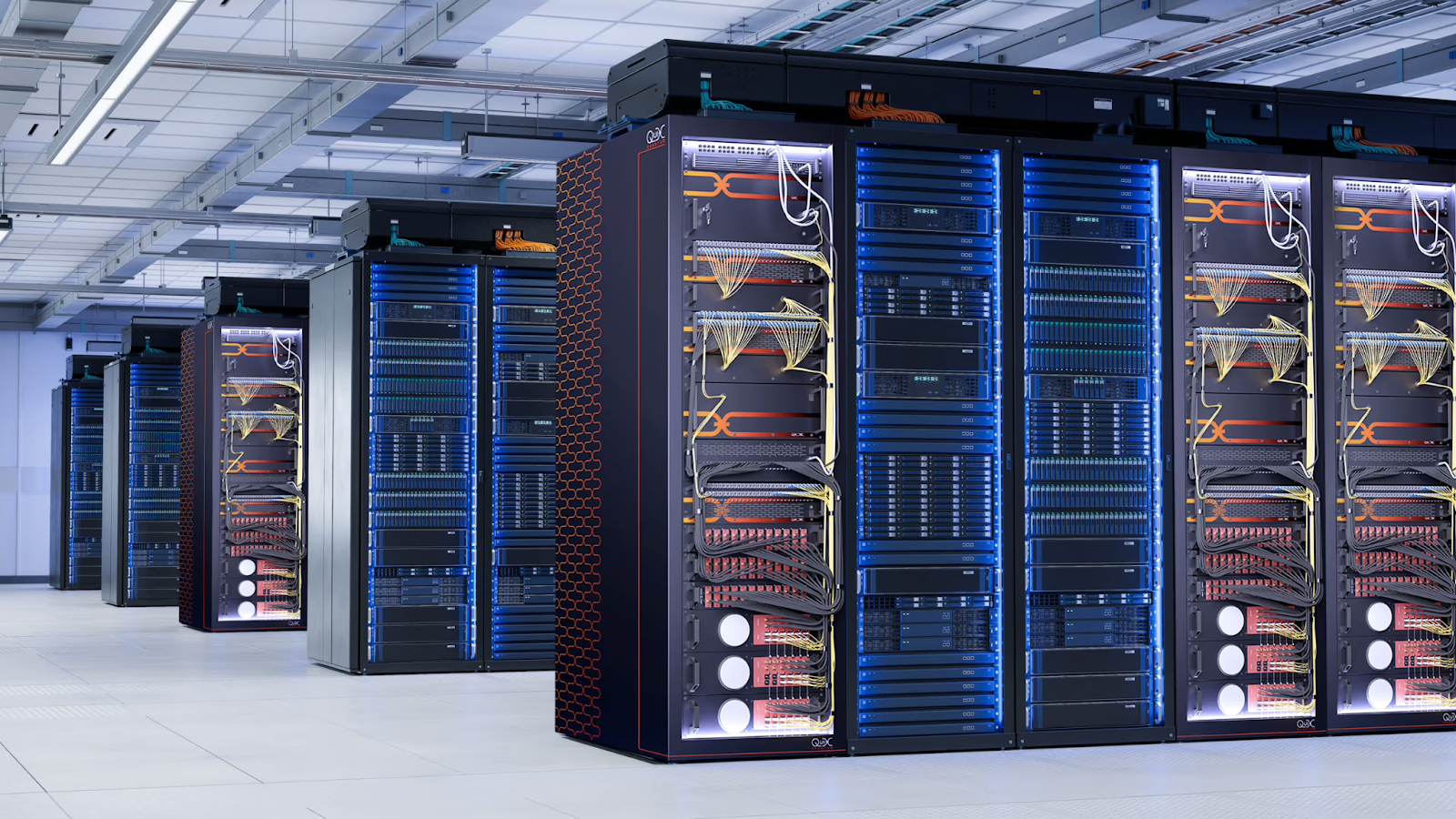
Dutch photonic quantum computing leader QuiX Quantum has signed a strategic partnership with Taiwan's Artilux to develop energy-efficient photonic quantum processors, marking a significant step toward bringing quantum computers out of specialized labs and into commercial data centers.
A Cross-Continental Quantum Alliance
QuiX Quantum, based in Enschede, Netherlands, and Artilux, a Hsinchu-based pioneer in germanium silicon (GeSi) photonic technology, have signed a Memorandum of Understanding (MoU) to integrate advanced detector technologies into photonic quantum hardware. The collaboration aims to strengthen hardware integration, improve manufacturability, and dramatically lower the operational energy requirements of quantum systems.
This partnership represents a convergence of European quantum system design expertise with Asian semiconductor manufacturing prowess—a combination that could accelerate the commercialization of practical quantum computers.
The Technical Challenge: Taming Quantum's Appetite for Cold
Today's quantum computers face a fundamental obstacle: they require massive cooling infrastructure to function. Most quantum processors operate at temperatures near absolute zero, demanding complex cryogenic systems that consume enormous energy and fill entire rooms.
The QuiX Quantum-Artilux collaboration targets this bottleneck by focusing on detector-level innovation. By integrating Artilux's germanium silicon (GeSi) photonic technology directly into the quantum hardware stack, the companies aim to simplify system architecture and significantly reduce cooling requirements.
GeSi technology enables high-performance photonic detection while operating at higher temperatures than traditional superconducting detectors—potentially eliminating layers of cryogenic infrastructure. This architectural shift could make photonic quantum computers compatible with standard data-center environments and high-performance computing (HPC) infrastructure.
From Lab Bench to Server Rack
The strategic focus extends beyond raw performance metrics. As quantum computing matures from academic research to real-world applications, industry attention has shifted from computational breakthroughs toward operational stability, energy efficiency, and total cost of ownership.
"Our collaboration supports our long-term strategy of building scalable and most energy-efficient photonic quantum computers," said Dr.-Ing. Stefan Hengesbach, CEO of QuiX Quantum. "This allows us to improve manufacturability, uptime and reduce operational complexity while further expanding practical deployment."
This approach aligns with QuiX Quantum's commercial trajectory—the company has already sold and contracted delivery of its first universal quantum computer, demonstrating market traction for its technology.
Industry Leaders Weigh In
Erik Chen, CEO of Artilux, emphasized the broader implications: "We are excited to collaborate with QuiX Quantum on leveraging our detector technologies to advance and support more energy-efficient and scalable quantum hardware. Partnerships like this help accelerate progress in next-generation photonic computing and underscore our growing role in global deep-tech innovation across multiple industrial sectors."
The partnership has also garnered diplomatic attention. Bas Pulles, Representative of the Netherlands Office in Taipei, commented: "We are pleased to witness the signing of this agreement between two technology pioneers; this agreement exemplifies how international cooperation can accelerate breakthrough technologies and create long-term economic and technological value for both regions."
Bridging Photonic and Electronic Ecosystems
The collaboration represents more than a simple supplier-customer relationship. By combining Artilux's expertise in high-throughput, low-power photonic sensors with QuiX Quantum's leadership in photonic system design, the companies aim to bridge the gap between electronic and photonic semiconductor ecosystems.
Artilux, founded in 2014, has positioned itself at the forefront of semiconductor and photonic innovation, developing GeSi technology that connects the electronic and photonic worlds. The company's technology spans communications, sensing, imaging, and computing applications—with quantum computing now added to its portfolio.
QuiX Quantum, with offices across Europe, continues to push the boundaries of quantum technology while serving a growing global customer base.
Path to Commercial Deployment
The partnership explicitly targets deployability and commercial viability. By integrating detector components more closely within photonic quantum hardware, the companies aim to create systems designed from the ground up for data-center environments.
This approach addresses a critical industry need: quantum computers must eventually operate alongside conventional servers, not in isolated laboratory conditions. Reducing infrastructure demands while maintaining performance will be essential for widespread adoption.
A Milestone for Taiwan-Netherlands Tech Cooperation
The QuiX Quantum-Artilux partnership adds to a growing list of technology collaborations between Taiwan and the Netherlands, two regions with complementary strengths in semiconductor manufacturing and advanced system design.
As quantum technology moves toward commercialization, such international partnerships may become increasingly common—combining specialized expertise from different corners of the global innovation ecosystem.
For now, the collaboration represents a significant bet on photonic quantum computing as a viable path to scalable, energy-efficient quantum processors. If successful, the partnership could help deliver quantum computers that not only break computational barriers but also fit comfortably into the data centers of tomorrow.